 SANTOKU
 SANTOKU

In short
A false edge — knifemakers call it a swedge — is an unsharpened bevel ground into the spine of the blade near the tip. It looks sharp but doesn't cut. Makers add one for three reasons: to lighten and balance the blade, to sharpen and strengthen the tip, and to improve the look of the knife. You'll see false edges most often on clip-point, Bowie and pocket knives — rarely on kitchen knives, which keep a plain, safe spine.
But why on earth would a knifemaker grind a false edge into the spine of a blade rather than the cutting edge? The truth is that there are several reasons, but keep in mind it's not something you'll see on every blade. Generally speaking, they're most common on clip point blades, folding knives or a pocket knife.
There are three main reasons a knife might have a false edge: to enhance the tip, to reduce the weight, or simply to make it look good.
If you've got a knife with a false edge, you might have been wondering why. Let's take a look at the most common reasons in a little more detail.
Table of content
What Type of Knives Have a False Edge?
While any type of blade could have a false edge, it's much more common to see this design feature on a clip point blade.The clip point blade is one where the knife's spine slopes downwards towards the pointed tip. Normally, it will align with the tip of the knife along the central axis of the blade. You might see clip point blades that have a straight slope towards the tip whereas others have a very prominent recurve.
One of the most famous types of clip point knives is the Bowie knife. While the overall design can vary a lot, you'll normally find that these knife blades have a recurved clip point, but there are a lot of straight ones about too. In both cases, there may or may not be a false edge.
On a Bowie knife, you'll notice that the clip normally only comes around halfway down the blade; sometimes just a third of the way down. It's on this part of the clip that you'll find that bevelled false edge. Note that the false edge won't go any further towards the handle than the clip.
But don't think that false edges can only be found on clip point knives. There are plenty of other knife types — including drop point, trailing point and spey point blades — that may have a false edge. There are even some knives that have several false edges around the spine.
What Is a False Edge?
 A false edge, or swedge, is an unsharpened bevel on the spine near the tip that looks sharp but isn't. If you speak to a knifemaker, they probably won't use the term false edge at all — they'll call it a swedge. Regardless of the name, it refers to an area on the knife's spine that is bevelled so it looks as though it's sharp when, in reality, it isn't.
Typically, the false edge is ground into the spine at a much wider angle than you'd see on an edge that's actually sharp. It's also a lot shallower and doesn't extend all the way down the blade — just along part of the spine near the tip.

Is It Possible to Have a Sharp False Edge?
If the false edge were sharpened into a true cutting edge, it wouldn't be a false edge any more. Because it's a bevelled edge, it's physically possible to sharpen it.However, whether that's wise is another matter, and it's largely determined by the overall design of the blade. If the result would be a sharp edge on the spine or top edge, the knife would essentially become double edged — a dagger. Daggers aren't legal in all parts of the world, so this isn't something you'd want to do.
Even where it's legal, it might not be a good idea. Turning the spine into a cutting edge alters the whole blade and can be dangerous. Imagine sharpening the false edge of a folding knife: the whole point of a folding knife is that the blade is covered and protected when not in use, but a sharp spine facing upwards when the knife is folded completely overrides that.
Why Do Some Knives Have a False Edge?
As we've learned, not all knives have a false edge. However, a good number do, and the reason could be one of several.Reduce Weight
For knives with longer blades, or blades that are much thicker than average, weight can become a problem. While you want your knife to feel sturdy, you don't want it to weigh you down. Excess weight throws the balance off and affects how you use the knife.So some knifemakers add a false edge to reduce the weight of such blades. This improves the balance and makes the knife much easier to use. You'll also notice that knives like this suddenly feel more lightweight and comfortable.
In some cases, where balance needs improving in different areas of the knife, the maker will add more than one false edge.
Enhance the Tip
A lot of clip point knives have extremely sharp points suited to their intended use. The same is true of some drop point knives. Adding a false edge removes any right angles on the spine, which can make the tip more effective when needed for piercing actions.The reduced weight also means the knife is easier to control and far more nimble. You'll commonly see this on hunting knives, where getting through animal skin is easier with this design and the blade moves smoothly through the task.
Improve Appearance
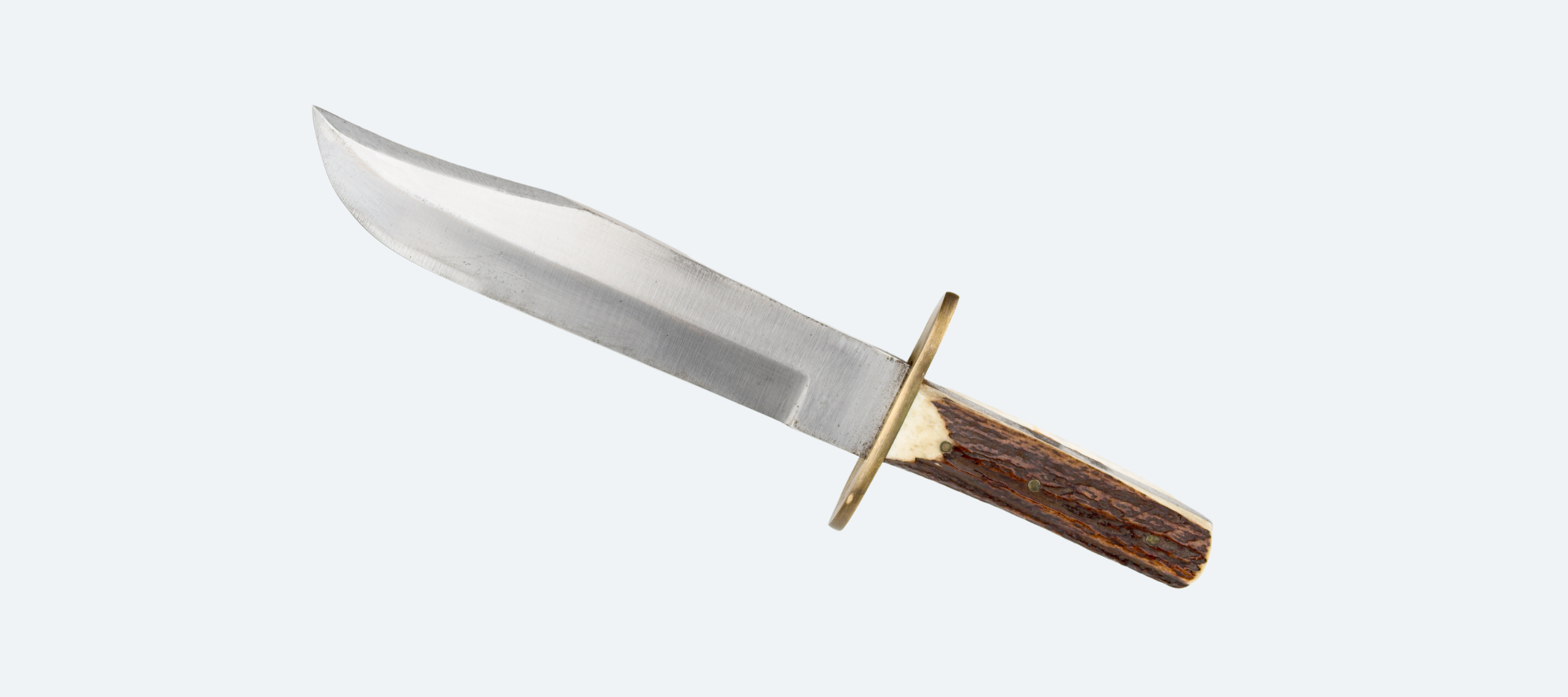 Owning a good-quality knife isn't all about practicalities. Sometimes you just want it to look the part, and a false edge can be added to improve the aesthetics of the blade. It makes the blade look more three-dimensional and certainly attracts attention.
What's more, a false edge breaks up harsh lines and can give the blade a more military appearance.
That said, knifemakers typically reserve false edges for knives made with thicker steel, as they don't look as good on a thin blade and would take away from its strength.
Final Thoughts
There are several reasons you might see a false edge on a knife. They're normally found on clip point blades, but they can be added to a variety of knife types — to reduce weight and improve balance, to strengthen and sharpen the tip, or simply to boost aesthetic appeal. One place you won't usually find a false edge is the kitchen: Japanese-steel knives such as the gyuto, santoku and kiritsuke keep a plain, flat spine that's safe to guide with a finger and comfortable in the hand.Frequently Asked Questions
What is a false edge on a knife?
A false edge is an unsharpened bevel ground into the spine of a knife near the tip. It looks sharp but does not cut. Knifemakers call it a swedge. It is added to lighten the blade, strengthen and sharpen the tip, or improve the knife's appearance.
Is a false edge sharp?
No. A false edge only looks sharp. It is ground at a wider, shallower angle than a real cutting edge and is left unsharpened. Sharpening it would turn the knife into a double-edged blade, which is illegal in many places and defeats the purpose of a safe spine.
What is the difference between a false edge and a swedge?
They are the same thing. Swedge is the term knifemakers use for the unsharpened bevel on the spine; false edge is the everyday name for it because it resembles a cutting edge without being one.
Do kitchen knives have a false edge?
Rarely. False edges are most common on clip-point, Bowie, hunting and pocket knives. Japanese-steel kitchen knives such as gyuto, santoku and kiritsuke keep a plain, flat spine so it stays safe to guide with a finger and comfortable in the hand.
Prefer a clean-spined kitchen knife built for everyday prep? Explore our Japanese-steel chef knives — like the Haruta 8″ VG10 Gyuto (£89.99) or the Aiko Black Damascus range from £64.99.
Shop chef knives →

